
The Second Life of Renewable Infrastructure
by Dan Roscoe, CEO of Roswall
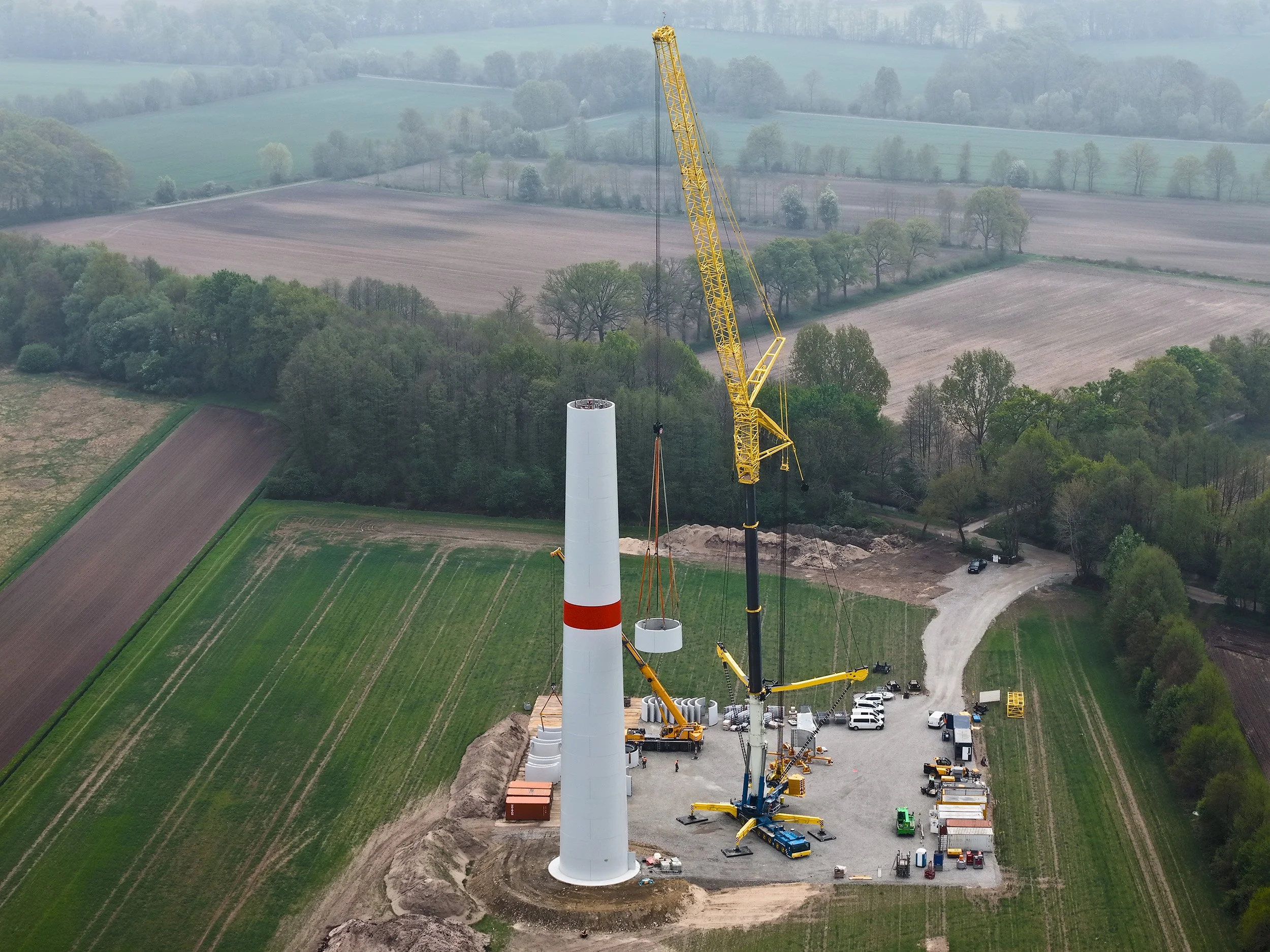
The hard part of a wind project is building the site, and that value doesn't retire when the machinery does.
One of the more durable criticisms of wind energy is that turbines only last 20 to 30 years, usually delivered as though the whole investment disappears the moment the machinery reaches the end of its working life. It's a tidy line, and it misreads what a wind project is. The turbines are the part that wears out, but the project underneath them is a different asset altogether.
By the time that first generation of equipment retires, the site it stands on has a proven wind resource, grid access, roads, land agreements, years of operating data and a store of hard-won development knowledge. The machinery may need replacing, but the difficult work, establishing generation at that location in the first place, is already done. A turbine runs for a few decades, and a well-developed site can stay productive for generations. That gap is what the 20-to-30-year figure quietly skips over.
We see the same pattern in every other kind of infrastructure the economy leans on. Electrical grids swap out transformers while keeping the network intact, and railways renew track, signals and rolling stock without rebuilding the corridor. The components turn over on their own schedule while the asset underneath keeps working, usually for far longer than any single piece of equipment installed to run it. Wind sits comfortably in that company. As turbines near the end of their service, a developer can extend their run, remove the project and restore the land, or repower the site with newer machines. Retiring the original turbines does not have to mean the end of generation there.
It is worth being clear about how much goes into a site before it produces a single unit of electricity. We identify and validate the resource, secure the right land, complete environmental studies, build relationships with communities and landowners, work through approvals, establish grid access and construct the roads and supporting infrastructure. The operating project then produces something nearly as valuable as the electricity, which is knowledge. Years of production data show how the wind actually behaves at that location, environmental monitoring sharpens the picture of the site, and real operating conditions reveal how the equipment, the roads and the grid connection hold up. A major repowering still calls for serious capital, but it does not begin with the uncertainty the original development had to price in. The resource is no longer a projection. The first generation has shown the location works.
Whitelee Windfarm in Scotland shows what that second life can look like. The site started operating in 2008 and grew to 215 turbines with a combined capacity of 539 megawatts. ScottishPower Renewables has now proposed replacing those with 124 larger, more modern machines, a change that would lift Whitelee to roughly one gigawatt, close to twice the electricity from far fewer turbines. The £1.5-billion project would be built in phases so parts of the site keep running through construction, and the plans account for continued public access, habitat restoration, community benefits and possible community ownership. A formal planning application is expected in 2027, with completion targeted for 2035. (Renewable Energy Magazine) Whitelee's real significance is what the turbine swap is built on, since decades of accumulated value at the site are becoming the foundation for a substantially bigger project.
This is where renewable infrastructure starts to compound. Newer turbines capture more energy and run more efficiently than the equipment on offer when most first-generation wind farms went up, operating data can guide turbine selection and site design, and existing roads, grid connections and other assets can often be reused or adapted. Repowering holds onto capacity that might otherwise be lost and adds new generation at a location system planners already understand, and the continued investment keeps people employed while sustaining the community benefits and supply chains that have grown up around the project. The original investment does not simply expire. Parts of it keep producing value by carrying the next phase.
None of that makes a second life automatic. Repowering asks more than a straight equipment swap, and a renewed project may need updated permits, fresh environmental assessment, new land agreements, different foundations, redesigned roads and grid upgrades to handle the greater output. The retired components have to come out and, wherever possible, be reused or recycled responsibly. Larger turbines can change how a project sits in the landscape and how it affects habitat and local transportation, so the communities that have lived alongside the original development deserve a real say in what comes next. Whitelee reflects that responsibility as much as the opportunity. ScottishPower's scoping report leans on the site's history and existing knowledge while still calling for updated surveys and consultation, because an operating record can inform the next development without standing in for a proper assessment of its future impact. (ScottishPower Renewables)
The practical lesson is to plan renewable projects with their full lifecycle in view from the start. Decommissioning plans should treat repowering, reuse and full site restoration as distinct paths, developers should preserve the operating and environmental data that will inform whatever comes next, and community relationships should be treated as long-term partnerships rather than something that ends when construction does. Grid operators and approval bodies need clear routes for repowering as well, because a productive site holds real enduring value even though it cannot simply be dropped back in place unchanged.
Twenty or 30 years sounds short when it is offered as the lifespan of an entire wind farm. Understood as the first operating generation of a much longer-lived asset, it looks like something else entirely. The first generation of turbines proves what a site is capable of, and the second life is where that capability compounds into something larger.
—
Dan Roscoe is the CEO of Roswall Development, a renewable energy developer, and President of Renewall Energy, a renewable energy provider, both based in Halifax, Nova Scotia. His work is focused on building the infrastructure for a cleaner, smarter energy future across Canada and beyond.