
Canada’s Renewable Resources Come With a Global Responsibility
by Dan Roscoe, CEO of Roswall
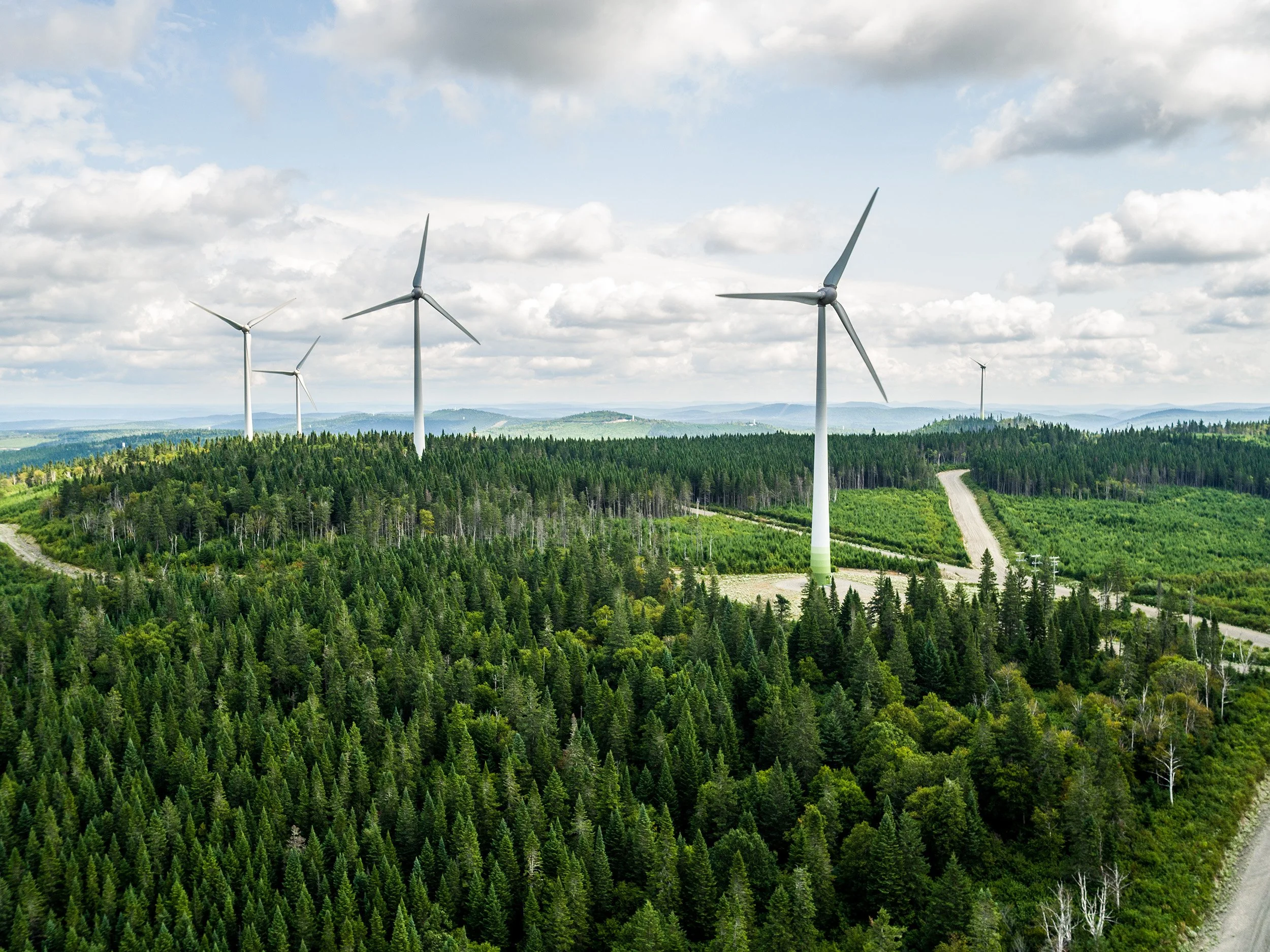
There are two stories Canadians tell about our place in the global energy transition, and both are half right.
One story says the country is already ahead, with a clean grid and resources most countries would envy. The other says Canada is a petrostate with good branding. The more useful reading sits between them. The resources are real, the delivery record is thin, and that combination creates an obligation rather than a claim to leadership.
Start with what actually exists. In 2024, renewable sources generated around 64 per cent of Canada's electricity, with hydroelectricity alone supplying 55 per cent. Most industrial economies are spending enormous amounts of money and political capital trying to build what Canada inherited from decisions made decades ago.
That foundation is worth something. As transportation, buildings and industry electrify, renewable electricity is what makes those conversions meaningful rather than cosmetic. Canada also has serious wind and solar resources, engineering and construction firms that know how to build large projects, critical minerals in the ground and a financing system that can move capital when it decides to.
But our grid is only part of the story.
Electricity is one slice of the energy Canadians use, and not the largest. In 2023, renewable energy accounted for 16 per cent of total end-use demand across buildings, transportation and industry. Canada emitted 685 megatonnes of greenhouse gases in 2024, 10.3 per cent below 2005 levels. In the most recent internationally comparable data, Canada produced 17.9 tonnes per person in 2022, second highest among the ten largest emitting countries and regions.
The clean grid is genuine and it is also not the whole picture. The hard work sits in oil and gas production, freight, heavy industry, agriculture and heating buildings. A renewable electricity system makes every one of those problems more solvable, and each still requires its own infrastructure, technology and policy. Nobody electrifies their way out of a cement plant by accident.
Canada has committed to cutting emissions 40 to 45 per cent below 2005 levels by 2030, 45 to 50 per cent by 2035, and to net zero by 2050. The latest federal projections put 2030 emissions at 28 per cent below 2005 even with additional announced measures. That is a substantial gap, and it is not primarily a gap in ambition or in policy design.
It is a delivery problem. Permitting takes too long. Transmission is not being built at anything close to the pace the targets assume. Equipment lead times are long, skilled labour is tight, and building real relationships with Indigenous and local communities cannot be compressed because a deadline is approaching. All of it has to happen while the lights stay on and bills stay payable.
This is the part that tends to get underrated. Solving those problems in public view would be Canada's most useful contribution to the global transition, more useful than any target announced at a summit. A large, decentralized federation with a resource economy will never run on a single national template, and that is precisely what makes it instructive. Credible transition models built across regions with very different grids and industries can travel. Countries that look nothing like Canada in the aggregate often look a great deal like one of its provinces.
Nova Scotia is where the thesis is currently being tested, because it starts from the position most jurisdictions are actually in.
In 2024, more than half of the province's electricity still came from non-renewable sources. Coal supplied 33 per cent, natural gas and oil another 21 per cent, and renewables accounted for about 40 per cent. That is a fossil-heavy starting point by any standard.
The province has legislated a coal phase-out and an 80 per cent renewable electricity target for 2030, and the Clean Power Plan attaches that target to a build list including nearly 2,000 megawatts of wind, solar and battery storage, a stronger transmission connection to New Brunswick, and investment in grid reliability. Demanding changes for a small system that takes a direct hit from Atlantic weather every few years and faces real affordability pressure.
The more interesting part is that Nova Scotia has long tested different answers to the question of who participates and who owns. The province became an early leader in local renewable energy ownership through the Community Feed-in Tariff program, which enabled municipalities, First Nations, co-operatives and community investment funds to develop projects. Organizations such as Scotian Wind and Wind4All raised millions of dollars from individual Nova Scotians to invest in locally owned wind generation.
That legacy is now evolving. New wind projects being developed to supply Nova Scotia Power are co-owned by private developers and Mi’kmaw communities. The Community Solar Program has approved four projects totalling 9.25 megawatts, including partnerships with Potlotek First Nation and the Multicultural Association of Cape Breton. Offshore wind and tidal work raise their own unresolved questions about fisheries, environmental protection and local benefit.
None of that is a victory lap. Cost, reliability, Indigenous rights, community trust and the pace at which infrastructure can realistically be approved and built are all still open. Confronting those questions with the work underway is a stronger form of leadership than announcing that the transition is going well.
Canada's renewable resources create options most countries simply do not have. And yet, they guarantee nothing. Projects have to move from planning into construction. New generation has to connect. Industrial policy has to produce emissions reductions someone can verify. Communities hosting this infrastructure have to see lasting value from it, in terms they define.
That is the responsibility attached to the advantage. Canada can show how climate progress works in a geographically enormous, politically decentralized, resource-dependent country, and it can show where the approach fails and what gets done about it. Both are useful to everyone else.
The world has already heard the targets. What comes next will be judged on the systems, the projects and the reductions the country can point to.
—
Dan Roscoe is the CEO of Roswall Development, a renewable energy developer, and President of Renewall Energy, a renewable energy provider, both based in Halifax, Nova Scotia. His work is focused on building the infrastructure for a cleaner, smarter energy future across Canada and beyond.