
The Next Bottleneck: Why Supply Chains Could Decide the Future of Clean Energy
by Dan Roscoe, CEO of Roswall
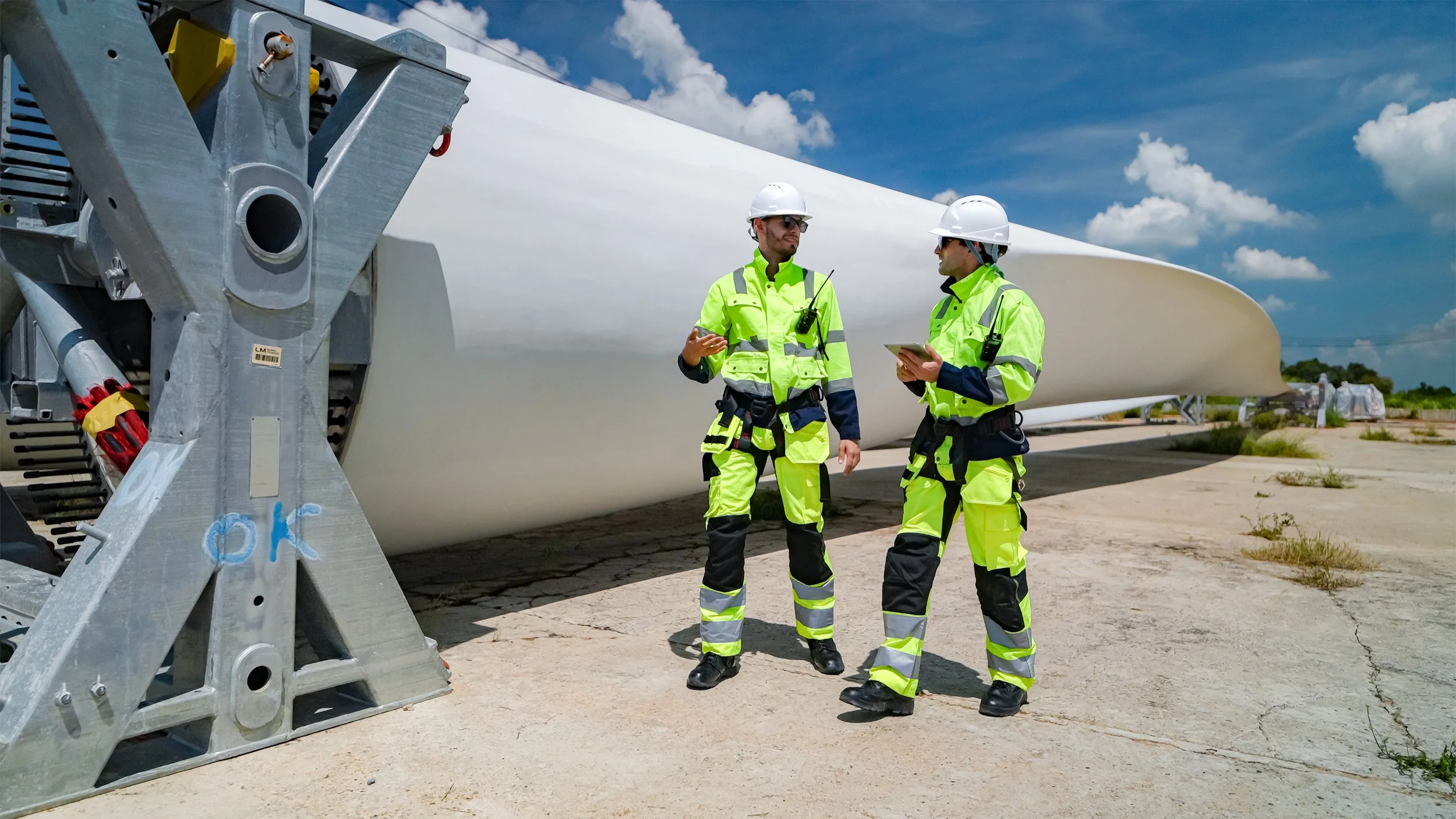
Renewables are growing faster than anyone predicted. But as new projects rise across every continent, a quieter crisis is emerging upstream.
In 2024, the world added more than 585 gigawatts of new renewable power, breaking every previous record. Wind, solar, and storage are scaling at unprecedented speed, reshaping global energy economics and bending the emissions curve.
But the faster the transition accelerates, the more visible its weak links become. The turbines, cables, transformers, and rare-earth components that power the transition are trapped in supply chains still optimized for the fossil era. Manufacturing, shipping, and materials networks, built over a century to serve oil, gas, and coal, are now struggling to supply the technologies meant to replace them.
The New Limiting Factor
The clean energy transition is no longer constrained by ambition, capital, or public support. It’s constrained by execution. Policy, investment, and market demand have finally aligned, but the ability to produce and move what the industry needs has not.
The success of the next decade will depend less on how much we plan to build, and more on whether we can build it at all. To secure true energy independence, nations will need to focus not just on generation projects but on the industrial ecosystems, from factories to refineries to ports, that sustain them.
According to BloombergNEF, global renewables investment hit record highs in 2024, yet deployment is stalling under logistical strain.
In Australia, for example, roughly 40% of renewable projects have been delayed due to grid interconnection backlogs and component shortages. Developers are ready, financing is available, but the parts aren’t arriving fast enough.
The problem is now systemic. Demand for turbines, cables, and transformers has outpaced global production capacity. Power grids designed for fossil generation are being asked to handle intermittent renewables, but the materials and manufacturing systems supporting those upgrades are lagging behind. The result is a paradox. We’re seeing unprecedented growth in investment, paired with frustrating limits on deployment speed.
The Material Constraint
Behind every wind turbine and battery lies a complex chain of raw materials, and many of those chains lead to a single country.
According to Le Monde, rare-earth export controls and restrictions are already disrupting Europe’s supply lines for magnets and advanced materials used in renewable technology. China currently refines around 90% of the world’s rare earths, a concentration that creates strategic vulnerability for every market trying to build energy independence.
Efforts to recycle, substitute, or locally refine critical minerals are expanding, but they’re not keeping pace with the build-out. Until they do, the clean energy transition risks trading one form of dependency for another: replacing fossil fuels with fragile mineral monopolies.
The Policy Shift and the Investor’s Equation
The world’s next wave of industrial policy must target clean-tech manufacturing. Governments must incentivize the capacity to build the parts those projects require.
The now sidelined U.S. Inflation Reduction Act had already demonstrated the effect of clear, production-linked incentives, sparking a surge of domestic manufacturing announcements in solar, battery, and grid equipment. The EU’s Net-Zero Industry Act follows a similar path, pairing climate targets with industrial competitiveness.
Canada is beginning to move in the same direction through clean technology tax credits and provincial manufacturing incentives, but progress remains uneven. Without domestic manufacturing, “green dependency” could become the new barrier to energy independence, a risk that goes beyond economics to touch national security.
Policy alignment builds ambition, but stable supply chains build confidence. And confidence is what keeps capital flowing into clean energy at scale.
BloombergNEF data shows that while global clean energy investment is at record levels, returns are tightening as equipment shortages drive up project costs. Financing large-scale developments depends on predictability. Stable supply chains reduce risk premiums and keep projects bankable.
The Way Forward
The next frontier for clean energy is capability.
To sustain the transition, we must expand the physical backbone that enables it: domestic factories, specialized ports, skilled trades, and efficient logistics corridors. Each turbine blade or transformer built closer to home shortens timelines, cuts emissions, and strengthens economic sovereignty.
For Canada, and particularly for Atlantic developers, the opportunity lies in manufacturing, materials, and workforce training investments that will pay long-term dividends in affordability, resilience, and national competitiveness.
The world already knows how to build clean energy. The question is whether we can build the supply chains to match our ambition.
Every gigawatt added to the grid deepens our reliance on a manufacturing system still optimized for the past. To make renewables not only abundant but secure, nations like Canada must build the infrastructure of independence. We need to own the supply chains, the skills, and the policy frameworks that ensure clean energy stays affordable and resilient for decades to come.
—
Dan Roscoe is the CEO of Roswall Development, a renewable energy developer, and President of Renewall Energy, a renewable energy provider, both based in Halifax, Nova Scotia. His work is focused on building the infrastructure for a cleaner, smarter energy future across Canada and beyond.